Will the GRID Power Act improve Reliability?
The U.S. House of Representatives passed the ‘‘Guaranteeing Reliability through the Interconnection of Dispatchable Power Act’’ on September 18, 2025, with the intention to give dispatchable power plants priority in interconnection queues.
“The interconnection queue is overwhelmed and bogged down, leaving shovel-ready power projects waiting for years while demand continues to climb,” Rep. Troy Balderson, R-Ohio and the bill’s sponsor, said in a press release.
The bill defines the term “dispatchable power” as “an electric energy generation resource capable of quickly ramping up or shutting down in time intervals necessary to ensure grid reliability.”
As a former System Operator, I believe that Flexibility is an under-appreciated yet CRITICAL aspect of reliable grid operations. The generation stack (as a whole) must be able to cover for unplanned outages (of generation and transmission) and the resource constraints of wind and solar generators which make up an ever-increasing percentage of power generation and the bulk of the capacity in interconnection queues. Therefore, the bill’s framework for enabling prioritization of dispatchable assets is commendable.
Background
The US electric system consists of 7 regional transmission organizations (RTO) and independent system operators (ISO), i.e., ISO-NE in New England, NYISO in New York, PJM Interconnection in the mid-Atlantic region, MISO in the mid-west region, SPP in the plains region, ERCOT in Texas, CAISO in California, along with roughly 60 utility balancing areas.
The collective set of power plants that have requested grid interconnection to the US electric system and have initiated the study process is known as the ‘‘interconnection queue.’’
According to a study conducted by Berkeley Lab, the time required to secure a connection has increased by 70% over the last decade, up to 56 months in 2023. Delays can be attributed to a six-fold increase in interconnection requests since 2014, each of which requires studies for cost allocation of reliability-based network upgrades.
Reliability and Resource Adequacy
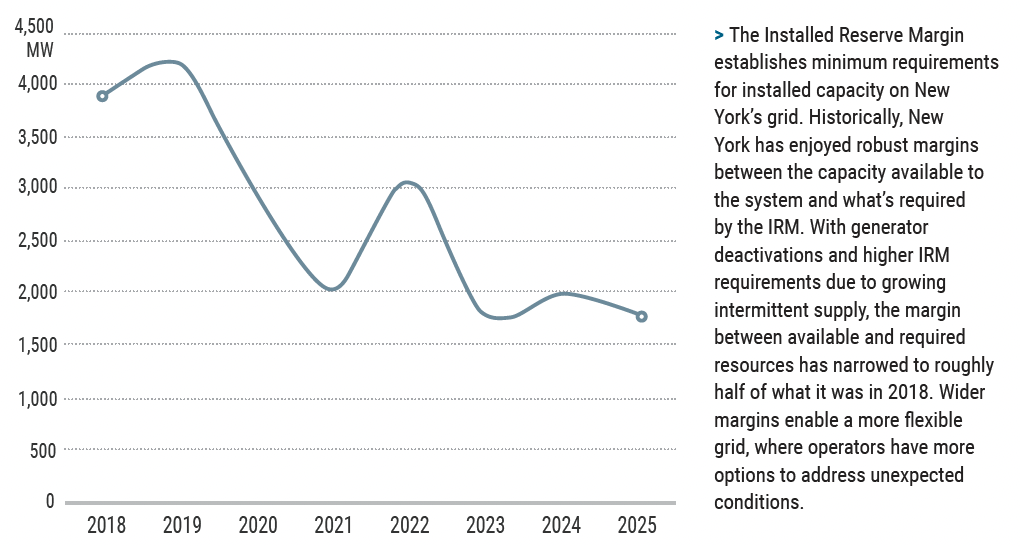
As traditional fossil-fueled generation deactivates in response to decarbonization goals and tighter emissions regulations, reliability margins on the grid are eroding.
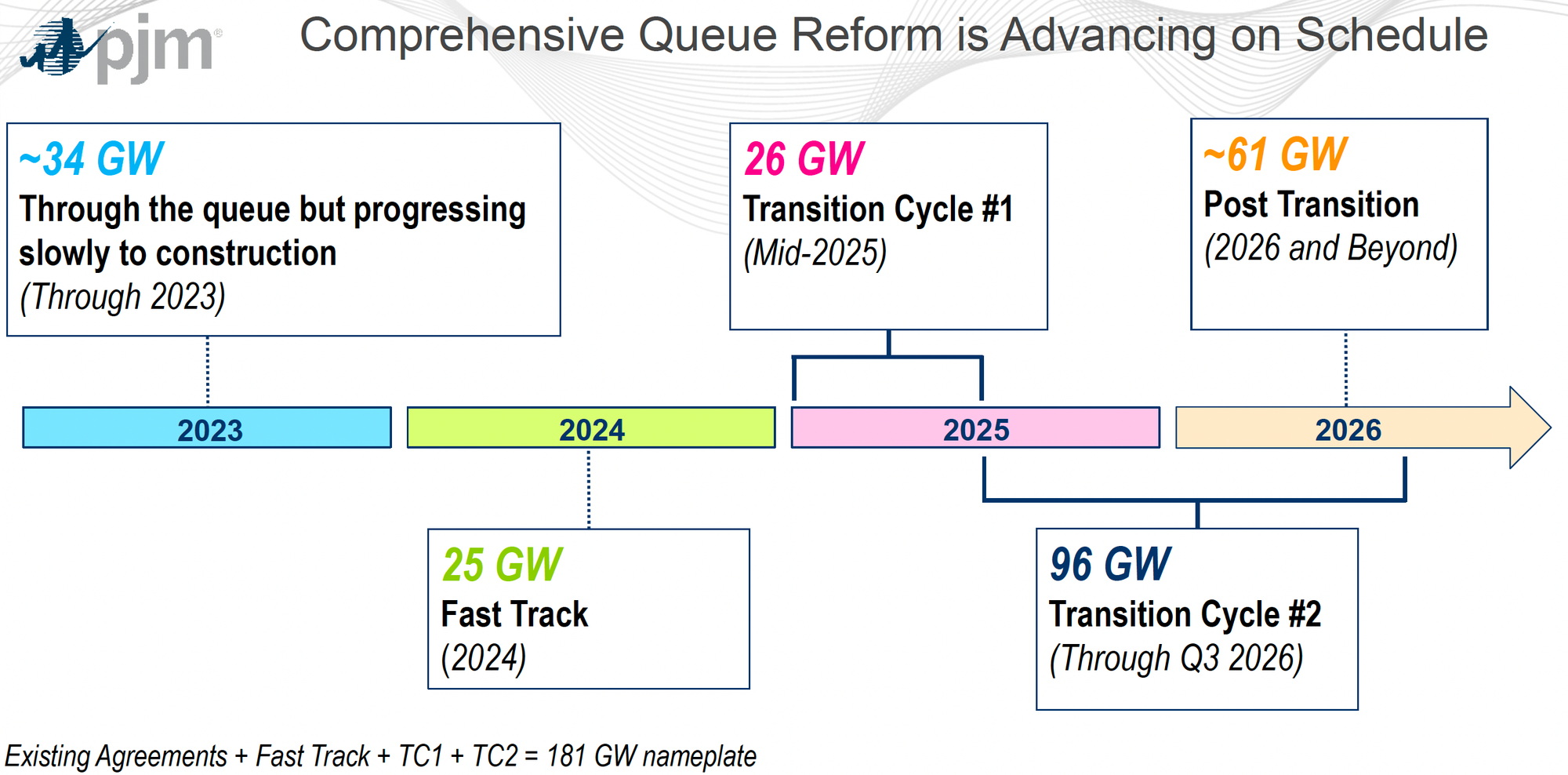
PJM claims to face up to 40 GW of existing generating retirements by 2030. While PJM’s interconnection queues (Existing Agreements + Fast Track + TC1 + TC2) contained an impressive 181 GW in 2024, 95% of the capacity comprised of resource-constrained solar, wind and energy storage projects.
But only 14% of proposed solar plants and 5% of storage projects reached completion over the last 20 years, compared to 32% of natural gas plants according to the Berkeley Lab study. Therefore, concerns about eroding Reserve Margins are well founded.
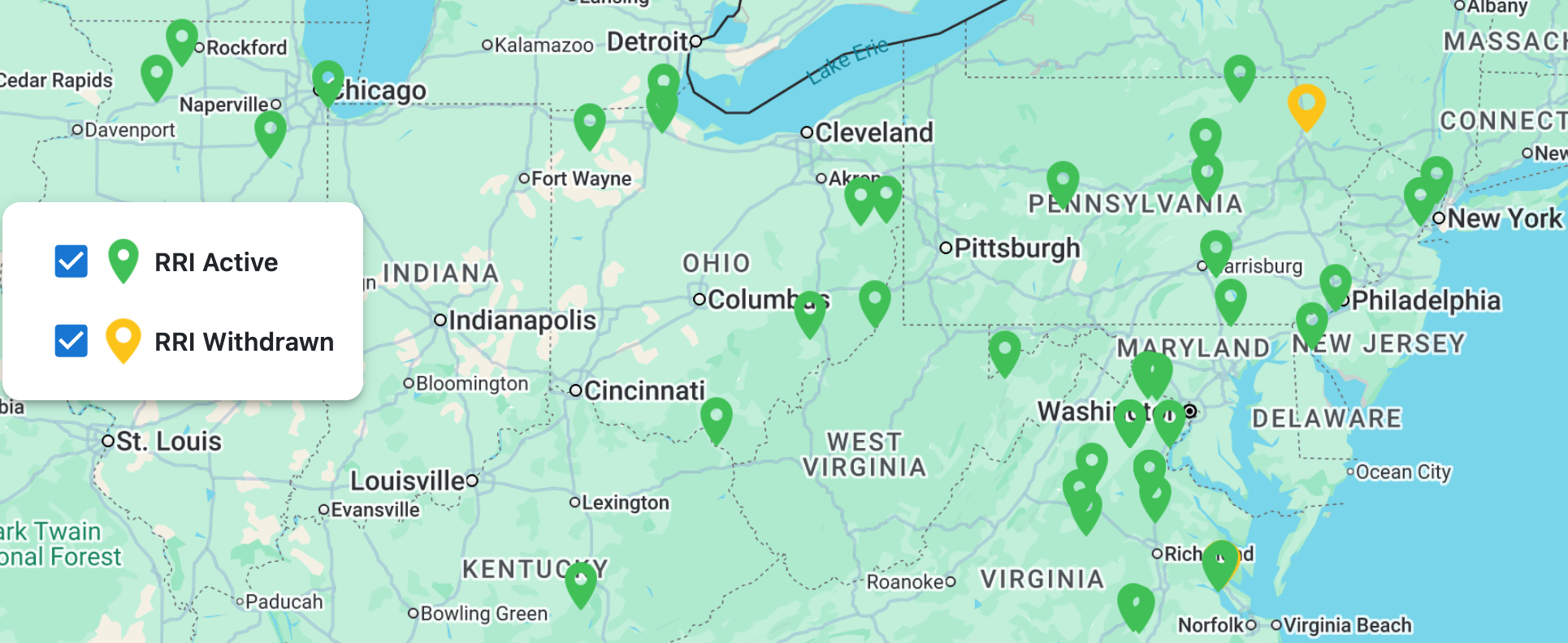
In 2025, the Federal Energy Regulatory Commission (FERC) approved PJM’s petition for its Reliability Resource Initiative (RRI), a one-time emergency measure to address “significant near-term resource adequacy concerns” driven by a data center led surge in demand growth forecasts. RRI would bring resources not currently in the interconnection queue through a one-time expansion of the eligibility criteria to make an impact within the existing energy transition.
PJM selected 51 projects totaling 9,300 MW through the RRI, which was at the lower end of their forecasted shortage of 10,000 MW to 26,000 MW by 2030, depending on demand growth. Interestingly, only 12 projects were new – 5,500 MW gas-fired, one new nuclear unit on Three Mile Island, and 2,200 MW of storage. The remaining capacity was applications for repowering ageing power stations.
The “GRID Power Act” and it's significance
Electrification continues to expand across transportation, industrial processes, and buildings and homes. Yet, more than 10,000 MW, roughly 25% of New York state’s total generating capacity, has been in operation for than 50 years.
The New York State Reliability Council (NYSRC), which establishes rules used to assess grid reliability, identified the need to model winter operations under conditions in which generators have limited access to natural gas. A new rule, adopted in May 2024, seeks to model future winter system operations under gas supply constraint conditions.
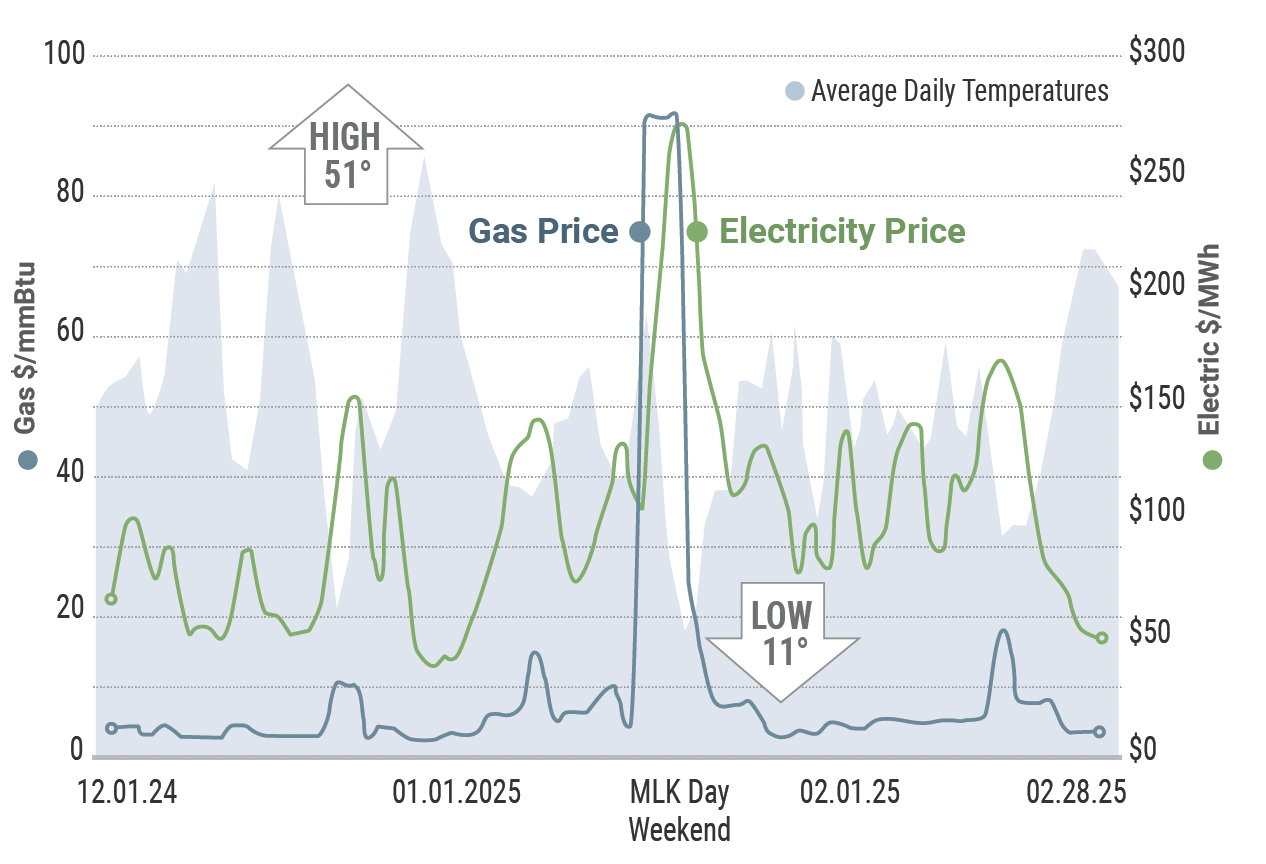
As reported in the EIA’s Natural Gas Weekly Report, released February 12, 2025, the January polar vortex caused natural gas prices in New York to increase nine-fold. To reflect tight gas supply conditions in its MARS (Multi-Area Reliability Simulation) model, the New York ISO (NYISO), modeled 6,400 MW of generation fueled by non-firm gas as unavailable when the demand forecast is above the winter baseline forecast.
The state’s clean energy goals seek to decarbonize the electric grid by 2040, and natural gas will continue to be necessary to maintain grid reliability during the transition period. Unless power system flexibility increases, reliability will be increasingly at risk under adverse weather conditions.
The ‘‘Guaranteeing Reliability through the Interconnection of Dispatchable Power Act’’ will enable prioritization of dispatchable assets. But just as importantly, it may also end up becoming a price discovery mechanism for insuring power plants against disaster risk, a risk that is still underpriced in the electric power utility and infrastructure world.
Conclusion
The cost of Reliability will invariably be set by the frequency and intensity of extreme weather events and the investment required to secure the system against such events. With Reserve Margins tightening, the rising trend in electricity bills will persist for the foreseeable future. But if cost optimal solutions do materialize, rate payers will come to regard the bill as a milestone in energy policy making.